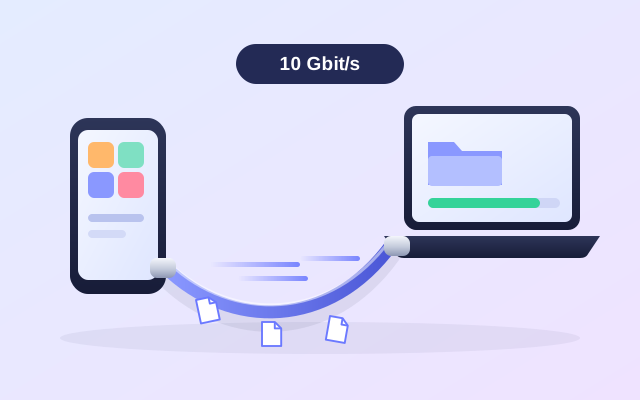
A 10 Gbit/s USB-C cable
Most charging cables copy at USB 2.0 speed. A cable rated for 10 Gbit/s can finish big copies several times sooner.
Opens Amazon.in in a new tab · affiliate link
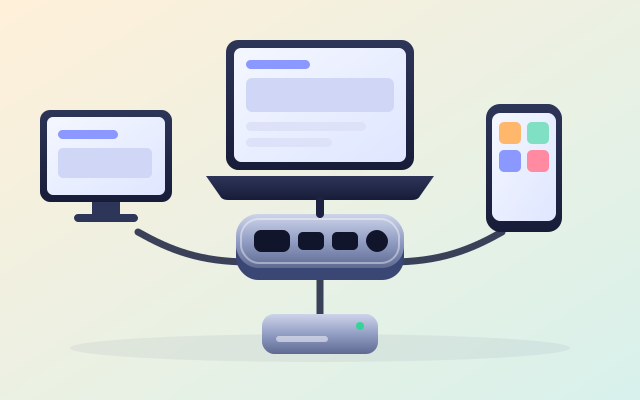
Thin laptops come with one or two ports, and you need four things plugged in: the phone cable, a drive, a card and a screen. A hub turns one USB-C port into several, so you stop pulling one thing out to put another in.
Opens Amazon.in in a new tab · affiliate link
An example: UGREEN USB-C hub, 7 in 1 (HDMI, USB-A, USB-C, card slots).
A phone cable, a drive, a card and a screen can all be plugged in together, with no unplugging in the middle of a copy.
USB-A pendrives, HDMI screens and card slots keep working on a laptop that only has USB-C.
It lives in the laptop bag, so the same setup works at a desk, in a café or at a client’s.
Many hubs let the laptop’s charger plug in too, so one port connects everything and charges the laptop. Check the listing.
You want to copy from the phone and from a card at the same time, and the laptop has two ports.
You are at a friend’s with a pendrive full of photos and a laptop that only has USB-C.
You want a screen, a drive and a phone cable on a laptop with a single port.
Two minutes with the listing now beats a surprise later. Look at these three things first.
We have not tested this product ourselves. It is an example of a well-known make that is widely sold, and the listing on Amazon.in is the place to check the details against your own phone and computer.
Count your plugs: USB-A, USB-C, HDMI, SD and microSD. The listing shows what each hub has. A hub with ports you never use is just bulk.
For drives, look for USB 3.0 or faster (5 or 10 Gbit/s). On some hubs the ports share one link, so a drive and a screen may not both run at full speed.
Check whether the hub passes charging through to the laptop, and how much. Hubs with many ports can get warm, which is normal; one that is too hot to touch is not.
A hub is how a laptop with one port can hold the phone’s cable and a drive together: ZeroMDroid sees the phone over the cable and the drive next to your folders at the same time.
Short, plain answers, including how this link works.
It can, if the hub shares one link between everything plugged in, or if its ports are USB 2.0. For a big copy look for USB 3.0 or faster ports, and use those for the drive and the phone.
Generally yes: most hubs need no driver for their ports, card slots and screen output. Check the listing for your system.
No. The price is the same with or without our link, and Amazon.in shows it, not us. If you buy, Fabrixly earns a small commission from Amazon. Nobody pays us to list a product.
No rush. The listing has the details, and what to check is right above. If it fits your phone and your computer, it is a small thing that makes a big job easier.
Opens Amazon.in in a new tab · affiliate link
Most charging cables copy at USB 2.0 speed. A cable rated for 10 Gbit/s can finish big copies several times sooner.
Opens Amazon.in in a new tab · affiliate link
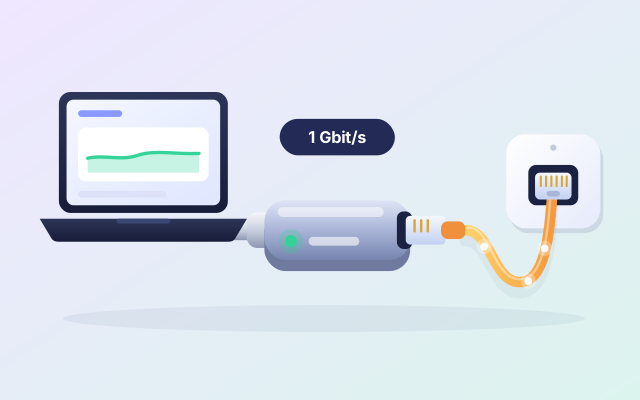
Give a laptop with no network port a wired link to the router: usually steadier than Wi-Fi, and quick for big files.
Opens Amazon.in in a new tab · affiliate link
A pocket-sized drive, usually far faster than a pendrive: a second copy of your photos, projects and phone backup.
Opens Amazon.in in a new tab · affiliate link
As an Amazon Associate I earn from qualifying purchases. Every link to Amazon.in on this page is an affiliate link: if you buy through it, Fabrixly earns a small commission from Amazon, and the price you pay does not change. Nobody pays us to list a product.
We have not tested these products ourselves. They are well-known brands that are widely sold, and the listing on Amazon.in is the place to check the details. Prices and availability are shown on Amazon.in, not here.